The Florida Largemouth
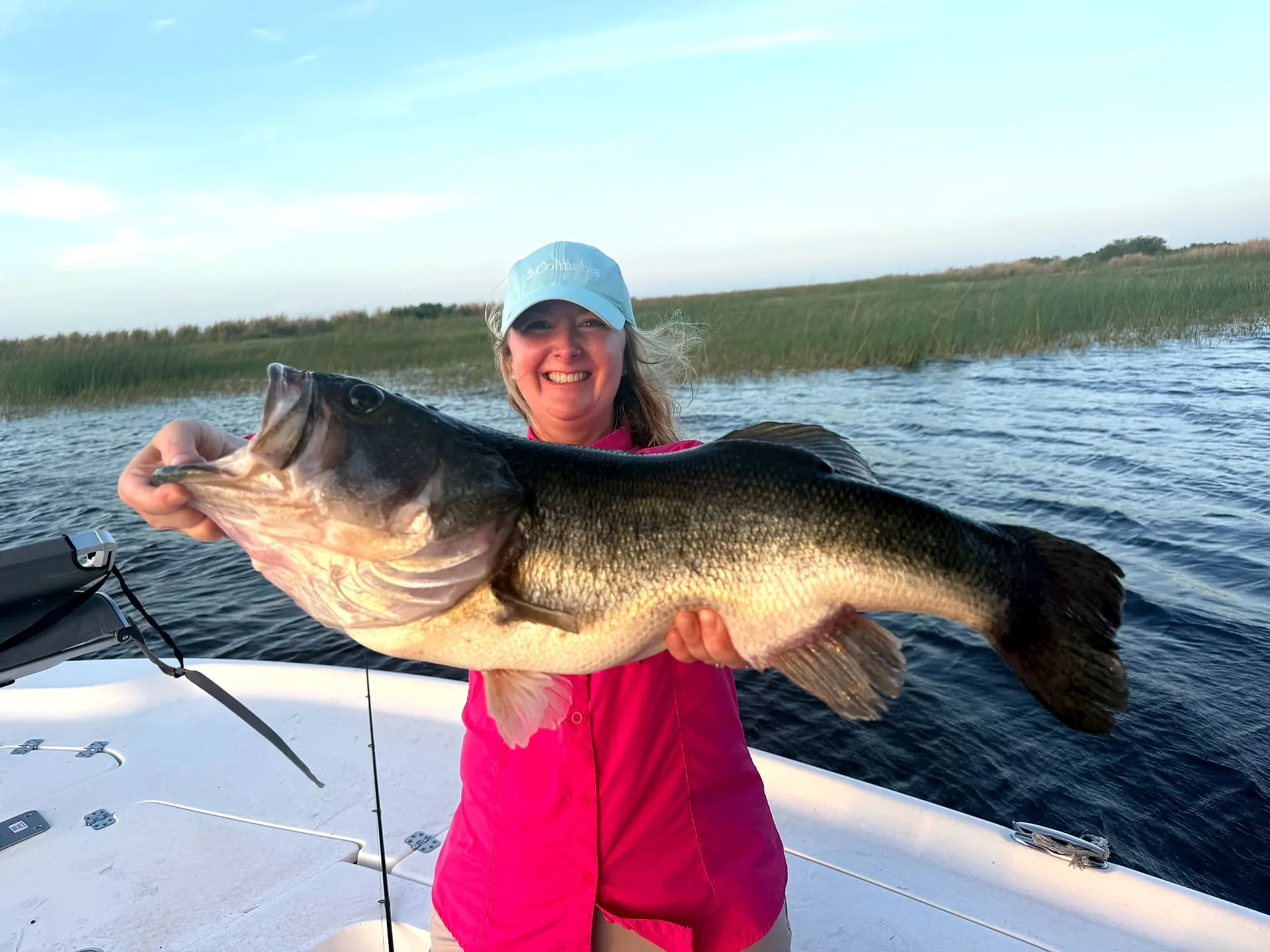
The Florida largemouth bass is the fish that put Lake Okeechobee on the map, and it’s the species most of my clients come to chase. The Florida bass — now recognized as its own species, not just a subspecies — grows bigger than the northern largemouth, and in fertile, grass-rich waters like the Big O it reaches genuinely trophy-class sizes. For a lot of anglers, a Florida giant is a true bucket-list fish — and getting you on one is what I love to do.
These are ambush predators built for shallow, weedy water. They tuck into maidencane grass, lily pads, reed lines, and hydrilla, waiting to crush anything that swims by. The cover that makes Okeechobee such a productive lake is exactly what holds these fish, and knowing how to fish it is the whole game.
When to Target Them
Here’s the short answer: largemouth are good on Okeechobee all year round. There is no month I won’t book a bass trip — the lake kicks out quality fish and true giants in every season. What changes is the pattern, not the odds of a great day.
The heaviest trophy window runs roughly December through April, when cooling water and the right moon phases pull heavy females shallow to spawn — that’s the stretch to plan around if a double-digit fish is the whole mission. But the rest of the calendar fishes, too:
- Winter / spring (Dec–Apr): Peak season. Fish stage and spawn shallow; best shot at a true trophy.
- Summer (May–Aug): Strong early-morning topwater and frog bite; fish relate to deeper grass edges and mats as it heats up.
- Fall (Sep–Nov): Fish feed up and chase bait along grass lines — a great, often-overlooked window.
How We Fish
I tailor the approach to the season, the conditions, and what you want out of the day.
Wild Shiners — My Preferred Method
When the goal is the biggest fish possible, nothing beats live wild shiners, and they’re my preferred way to fish for Okeechobee largemouth. A frisky native shiner presented around the right cover is a meal a big fish can’t resist, and I fish them tight to the points, cuts, and thicker clumps where giants ambush. (If you want the full how-and-why, I wrote a whole guide on wild shiner fishing.) Shiner trips are my go-to for trophy hunting and for getting beginners into quality fish; it’s hard to beat watching a cork go down and a giant come unbuttoned.
Artificials
Shiners lead the way, but for anglers who love to cast and work for their bites, we’ll throw artificials too:
- Flipping and pitching soft plastics and creature baits into heavy grass and pads for big bites
- Topwater frogs and walking baits along grass edges and reed lines in low light
- Reaction baits like swimbaits, lipless cranks, and bladed jigs to cover water and find active fish
Who It’s For
Largemouth trips work for everyone. If you’re a serious angler, we’ll grind heavy cover and fine-tune presentations. If you’re new, on a family trip, or just want a good day with a real chance at a big fish, a shiner trip keeps the action steady and the learning easy. Either way, the boat, the water, and the coaching are handled.
Plan Your Bass Trip
Largemouth are available all year, with the trophy window heaviest in the cooler months. Bag and size limits change, so we’ll always fish under current FWC regulations — check the latest rules before your trip. Reach out with your dates and goals — 4-, 6-, and 8-hour trips are available — and let’s get you on a Florida giant.