Why Winter Is Prime Time for Giants
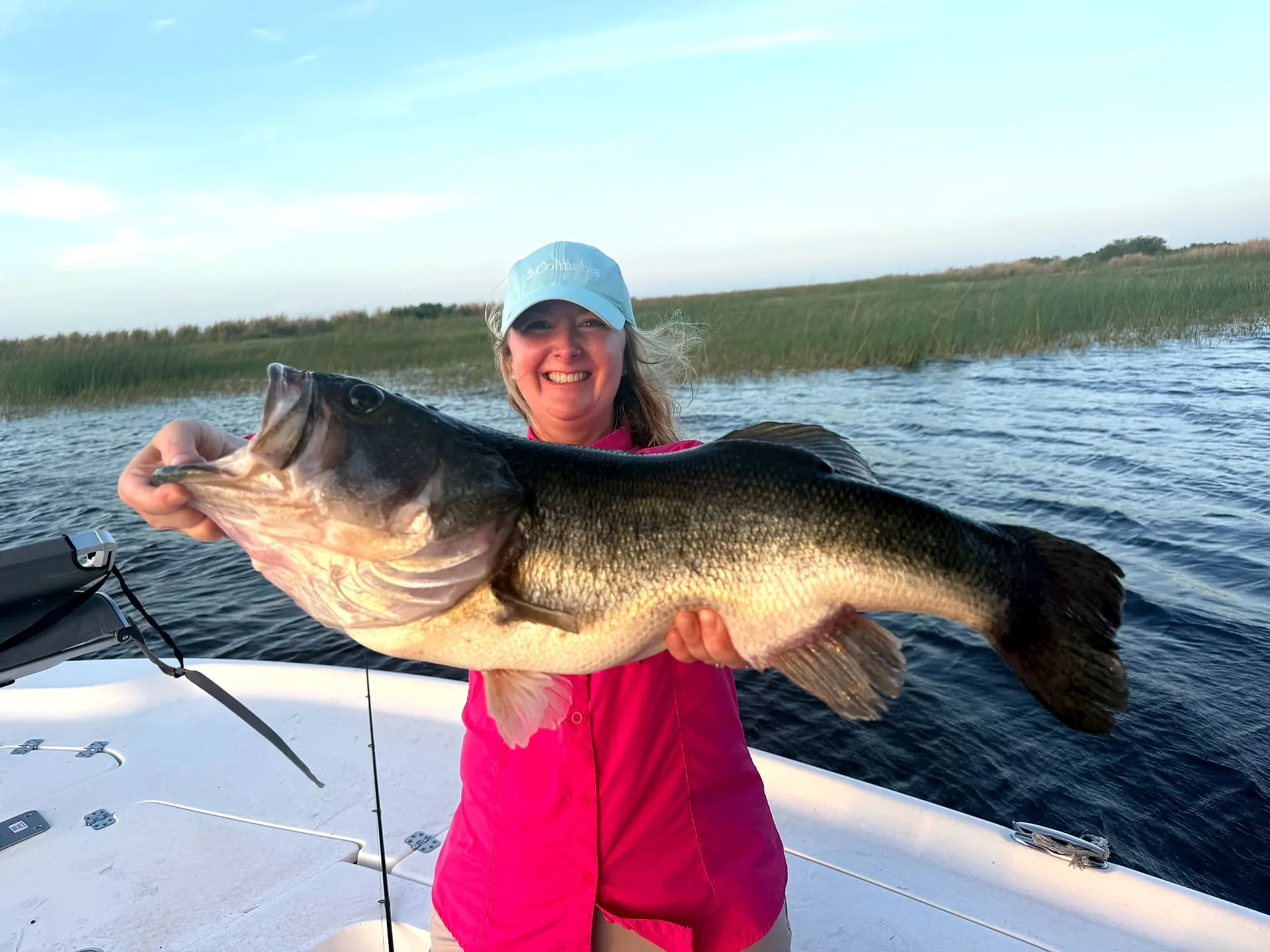
Ask any longtime Okeechobee guide when they’d pick to catch the bass of a lifetime, and most will point to the dead of winter. As the water cools into the 60s and even upper 50s, big female bass begin staging for the spawn, feeding up and moving toward shallow cover. Those heavy, egg-laden females are the ones that push the scales into double digits.
This is also our peak visitor season, and the fishing lives up to the trip. You don’t need a hundred bites in a day. In winter, it’s about quality.
Reading the Cold Fronts
Winter on the lake is a rhythm of cold fronts rolling through every week or so. The bass respond to that rhythm, and knowing where they’ll be makes all the difference.
- Ahead of a front: Falling barometer and warm, cloudy conditions. Fish get aggressive and roam. This is often the best window of the whole cycle.
- The front arrives: Wind, rain, and a temperature drop. Fish still bite but position tighter to cover.
- Post-front (bluebird skies): High pressure, cold, clear. The tough day. Fish bury in heavy cover and the bite slows — slow down with them.
Learning to fish each phase, rather than fighting it, is a big part of consistent winter success.
Pre-Spawn Staging
Through winter, bass transition from deeper grass and outside edges toward the shallow flats where they’ll eventually bed. They stage along travel routes and ambush points on the way in. Key spots to look for:
- Outside edges of reed and bulrush lines
- Points and cuts in the grass
- Isolated patches of thicker cover near spawning flats
- Hydrilla and eelgrass edges holding bait
Find that staging cover with baitfish nearby, and you’ve found where the big ones set up.
The Wild Shiner Edge
This is my go-to, and winter is when it shines brightest. Nothing out-produces a wild shiner on Okeechobee, and big shiners worked into the reeds are the surest way to tempt the heaviest pre-spawn females. January through March is prime for a double-digit bass. A quiet presentation along the reed and grass edges is most of the technique — I cover the rigging in detail in the wild shiner guide. It’s also about the easiest fishing in the boat for beginners and kids, since watching the float is the main job.
Flipping and Pitching Heavy Cover
Shiners lead the way, but for anglers who want to work for it with artificials, winter is also flipping season. When fish pull tight to cover — especially behind a front — you go in and get them.
- Flipping jigs with a craw trailer, pitched into matted grass and reed clumps
- Creature baits and craws on a Texas rig, punched or flipped into heavy cover
- Slow presentations — let the bait sit; these fish often won’t chase
Work methodically, hit every likely clump, and be ready — a big pre-spawn female bites soft but pulls like a freight train.
Where to Fish
Okeechobee is enormous, and the winter bite moves. The productive water shifts with fronts, wind, and water level, which is exactly why local knowledge pays off. Broadly, the vast grass flats, reed lines, and hydrilla edges around the lake’s rim all come alive in winter. Dialing in which stretch is best on a given day is the difference between a slow morning and the best day of your season — and it’s what a good guide is for.