Why Okeechobee Grows Giants
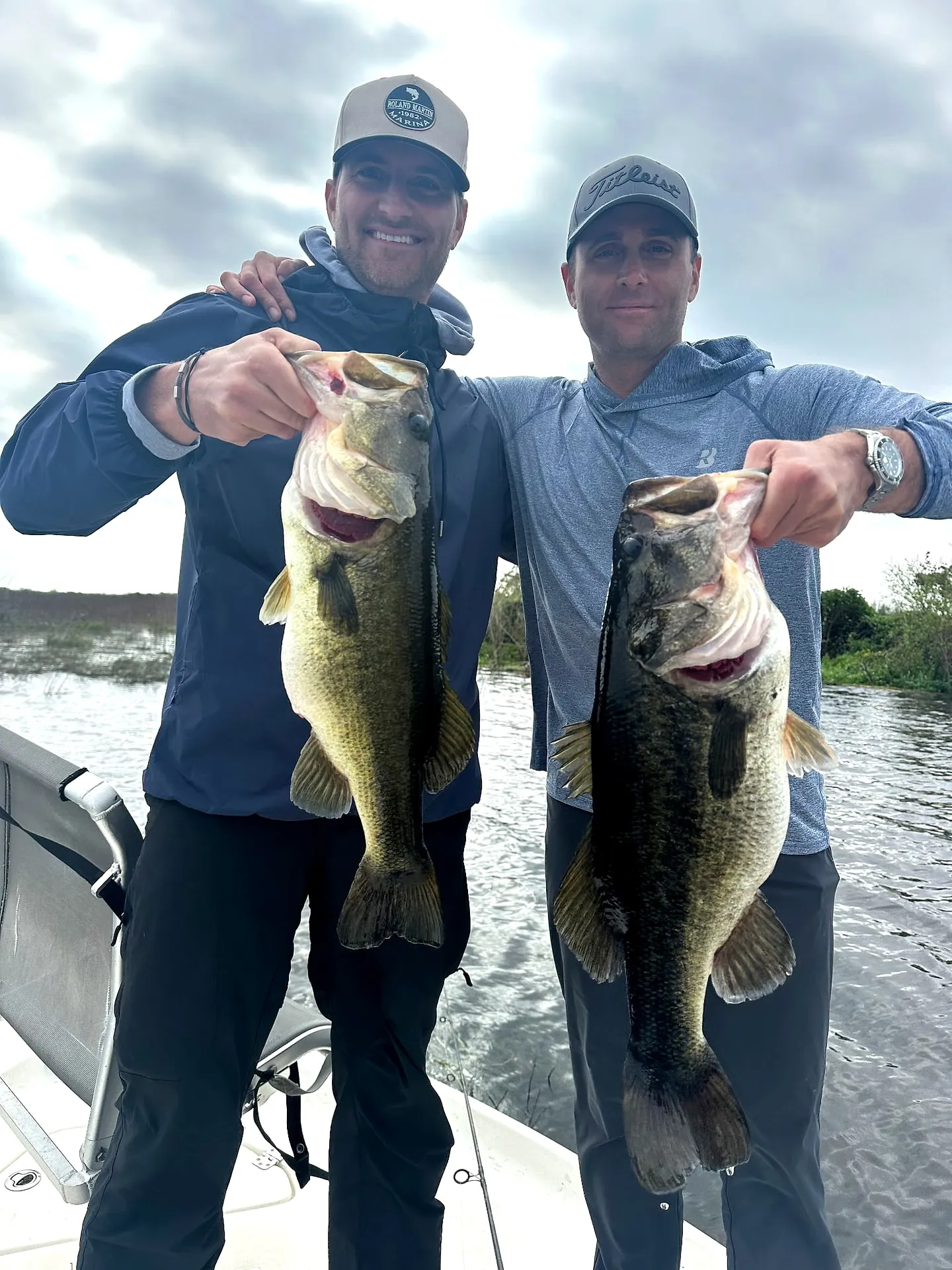
Two things make Lake Okeechobee grow so many big bass: genetics and habitat. The lake is full of pure Florida bass — a fish that grows larger than any other largemouth in the country. Add a warm climate, a long growing season, and tens of thousands of acres of fertile shallow grass, and heavy fish are the result.
Catching one still takes the right approach, at the right time, in the right places. Here’s how to stack the odds in your favor.
Timing Is Everything
Trophy bass are catchable year-round, but the odds spike in the cooler months. The window from December through April is prime, for one simple reason: the spawn.
- Winter (Dec–Feb): Big females feed heavily and stage for the spawn — peak time for a giant.
- Spring (Feb–Apr): Females move onto beds shallow, where they’re visible and catchable in waves around the moons.
The heaviest fish of the year carry eggs, so the pre-spawn and spawn are simply when the biggest bass are most vulnerable. If a personal best is the goal, plan your trip for the cool season.
Wild Shiners: The Trophy Method
There’s an honest answer to the “what’s the best bait” question for trophies on Okeechobee: wild shiners. A big, lively native shiner is a full meal a trophy female can’t ignore, and it draws bites that artificials simply won’t. It’s my headline method for anyone whose real goal is the biggest fish in the lake, and it’s beginner- and kid-friendly too, since there’s no casting or retrieve to master.
The short version of the presentation: a lively shiner fished quietly around the points, cuts, holes, and thicker clumps where big females ambush. The full rundown — free-lining, float rigs, and reading the bait — is in my wild shiner guide, and it’s worth the read if a giant is the goal.
Artificials for the Hunt
Shiners are the sure thing, but artificials absolutely catch big fish too, and they’re a blast for anglers who want to hunt them. Flipping jigs and creature baits into heavy cover, slow-rolling swimbaits, and pitching soft plastics to bedding fish all produce trophies for those who put in the casts. Many big-fish trips run shiners for the best odds while keeping a rod or two rigged with artificials for anglers who want to work for it.
Where the Big Ones Live
Trophy females relate to cover, bait, and shallow spawning flats. Focus on:
- Outside reed and bulrush lines with deeper water nearby
- Points, cuts, and irregular edges in the grass
- Thick, isolated cover near shallow spawning flats
- Hydrilla and eelgrass edges holding baitfish
Big fish like a quick escape to safety and an easy meal. The best spots offer both — and on a lake this size, they shift with water level and season, which is where local knowledge pays off.
Handle Them With Care
A trophy Okeechobee bass is often an old, heavy female — the exact fish that keeps the lake producing giants. Treat her right:
- Land, unhook, and photograph quickly
- Support her weight horizontally; never dangle a heavy fish vertically for long
- Revive her fully and watch her swim off strong
- Practicing catch-and-release on big females protects the fishery for the next angler chasing the same dream
Setting Expectations
Trophy hunting is not a numbers game. Some days you’ll get several quality bites; other days it comes down to one or two chances at a giant. That’s the trade-off — you’re targeting the biggest, oldest fish in the lake. Fish the right season, put in the time around the right cover, and Okeechobee gives you as good a shot at a double-digit bass as anywhere in Florida.