
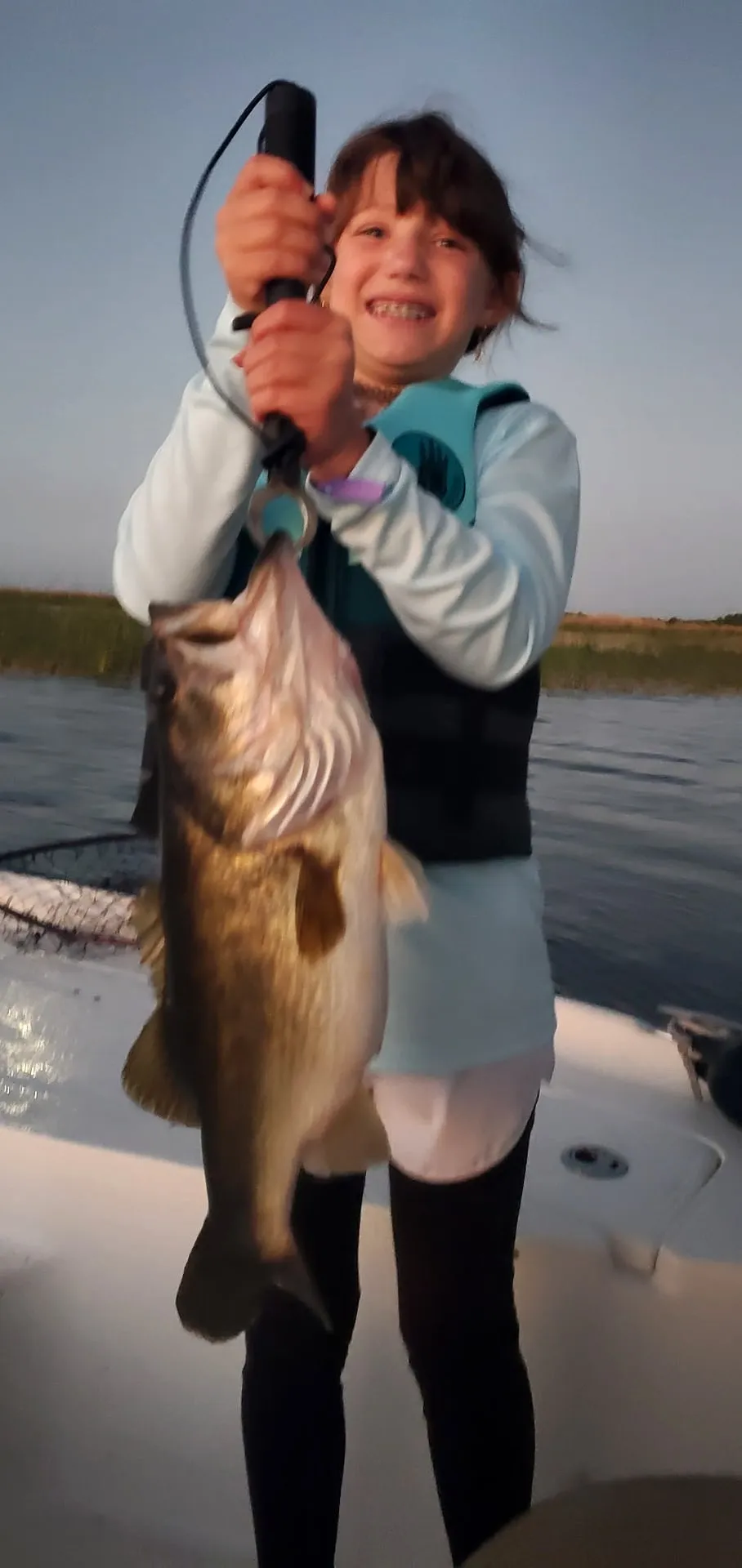
The Spawn — Okeechobee’s Signature Season
Every spring, Florida-strain largemouth push shallow to spawn, and Lake Okeechobee’s endless shallow flats become a giant nursery. This is when the lake’s genetics really show: Florida-strain bass grow bigger than any other largemouth in the country, and the spawn is when those trophy females are up shallow and catchable.
It’s also the most visual, exciting fishing of the year. You’re often looking right at the fish you’re trying to catch. The giants come shallow to spawn on the grassy flats and in sheltered bays, and classic spawn areas like Harney Pond, Moonshine Bay, and South Bay along the southern and western shores fill up with bedding fish.
Timing the Spawn
The spawn isn’t a single event — it rolls through in waves from late winter into spring, generally February through April, with different fish bedding at different times.
- Water temperature: Bass start moving up as water climbs into the mid-60s and up.
- Moon phases: The full and new moons are major triggers. Fresh waves of fish push up around each one.
- Weather: A stretch of warm, stable days brings fish shallow; a hard cold front can pull them back off temporarily.
Because it comes in waves, there’s good spawning action across the whole window — which is part of what makes spring such a reliable time to book.
Sight-Fishing the Beds
On calm, clear days you can pole or trolling-motor the shallow flats and actually spot bass fanning their beds — light-colored circles on the bottom. Sight-fishing is a game of patience: you present a bait to a specific fish and coax a reaction.
- Wild shiners — my go-to and the surest way to draw a bedding female, especially a finicky one; ease one right into the bed and she rarely refuses it
- Creature baits and craws on a Texas rig or wacky-rigged worms, pitched right into the bed
- Soft plastic swimbaits and flukes for cruising fish
The bite is often a defensive reaction rather than a feed, so watch the line and the fish closely. When she turns and inhales the bait, that’s your moment.
Fishing the Cover
Not every fish is visible. Plenty spawn back in the reeds and grass where you can’t see them. Blind-flipping and pitching soft plastics into shallow bulrush, reed lines, and matted grass on protected flats accounts for a lot of big spring fish — and shiners worked into those same pockets produce when you can’t sight-fish.
Respecting Bedding Fish
These big spawning females are the future of the fishery, and they deserve care. Okeechobee’s reputation depends on them.
- Handle fish quickly and get them back to release
- Support the belly of heavy females; don’t hold them vertically by the jaw for long
- Consider quick photos and a fast release so she can return to her bed
- Practicing thoughtful catch-and-release on trophy females keeps the lake producing giants for years to come
Pre-Spawn and Post-Spawn
The spawn is really three phases, and each fishes a little differently. In the pre-spawn, as fish stage on their way to the beds, they feed aggressively — this is a great window for shiners and moving baits along the outside edges and staging cover. During the spawn itself, fish lock onto beds and the game becomes patience and precise presentations. In the post-spawn, worn-out females pull off the beds to recover and males guard fry in the shallows; targeting shade, bait, and the first deeper grass just off the flats picks these fish back up. Because the spawn rolls through in waves, you’ll often find fish in all three phases on the same day.
What to Expect
Spring can deliver both numbers and size — you might catch smaller aggressive males all day and have a shot at a giant female at any moment. It’s the season most likely to put a personal-best bass in your hands — and often you’re watching the fish eat when it happens, whatever your skill level.