Florida’s Beloved Specks
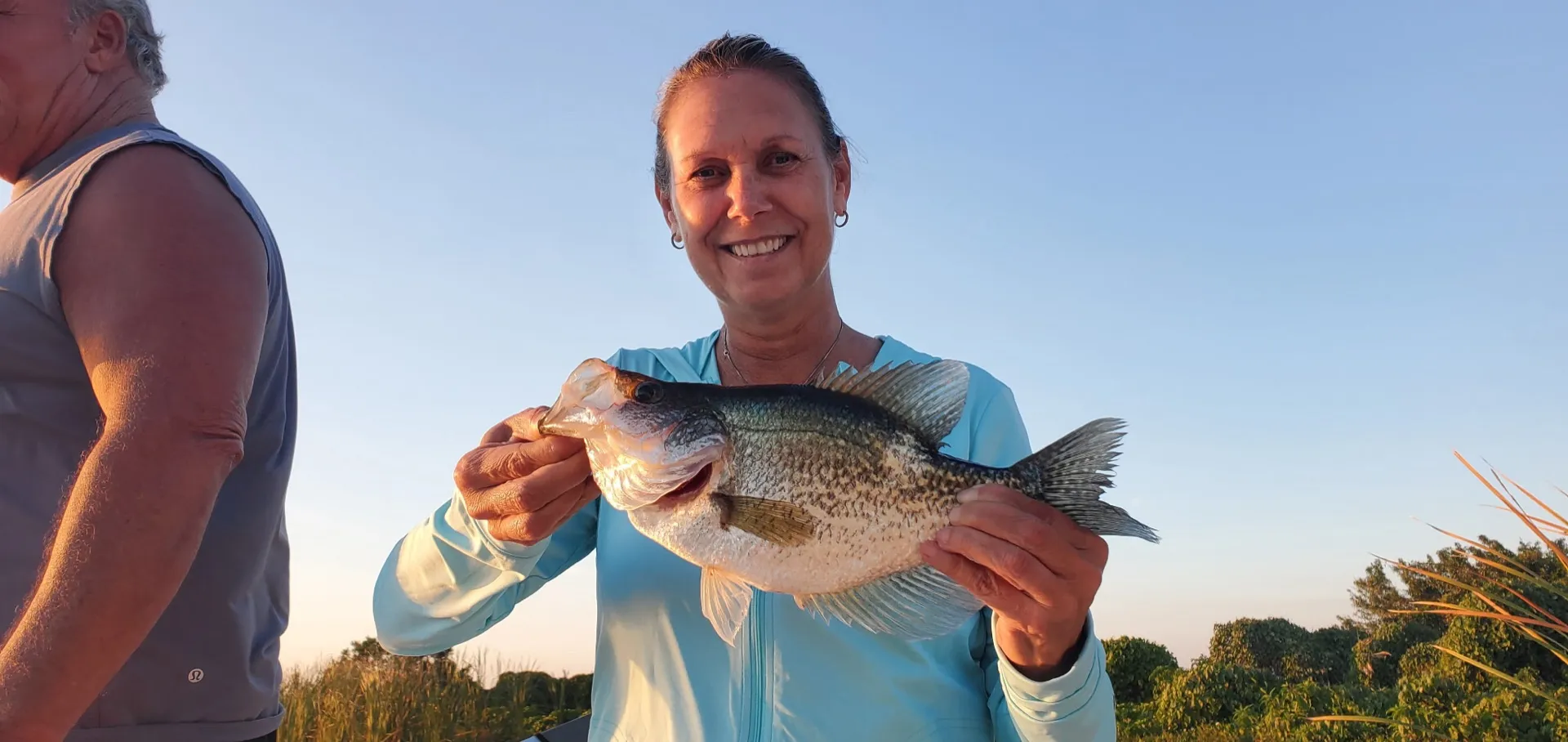
Black crappie — specks — are one of Lake Okeechobee’s great treasures. They’re abundant, they bite in bunches, and they’re outstanding on the table. Where bass fishing is often about patience and quality, crappie fishing is about action: when you find a school, everybody’s rod bends. That makes specks the ideal target for families, kids, beginners, and anyone who just wants a cooler full of fillets and a boat full of laughs.
When to Go
Crappie are a cool-season specialty. The bite is best from roughly November through March, when fish school up, feed heavily, and eventually push shallow to spawn as winter turns to spring.
- Late fall (Nov): Fish gather and the bite turns on.
- Winter (Dec–Feb): Peak season — big schools and fast action.
- Early spring (Mar): Specks move shallow to spawn around grass and brush; excellent numbers.
It lines up perfectly for visitors escaping colder weather, and it’s a reliable, high-catch trip through the heart of the tourist season.
Jigging vs. Minnows
The two staple presentations both catch plenty of fish, and we often run them together.
- Live minnows under a float or on a jig head — a simple, deadly presentation that’s especially great for kids and beginners.
- Jigging small marabou and soft-plastic jigs around cover and schools — a little more active, and you can quickly experiment with colors and depths.
Color, jig size, and depth all matter, and dialing them in on a given day is half the game.
Covering Water to Find Schools
Because specks roam and stack up in specific spots, locating them is the key. Several proven methods help cover water and pin down the fish:
- Drifting slowly with the wind, letting baits fan out until you contact a school
- Long-lining — trolling jigs behind the boat at a set depth to cover open water
- Spider-rigging multiple rods off the bow to fish several depths and spots at once
Once you find the school, you can slow down and pick it apart, or keep a controlled drift going right through it.
Brush and Open Water
Crappie relate to two main setups on Okeechobee. Brush and cover — submerged brush, grass edges, and structure — hold fish that you can pick apart with jigs and minnows. Open-water schools suspend over the flats and basins, and that’s where drifting, long-lining, and spider-rigging shine. Good days often involve checking both until the pattern reveals itself.
Dialing In Color and Depth
Crappie can be surprisingly particular from day to day, and small adjustments make a big difference. When the bite is slow, start experimenting rather than grinding away with the same setup.
- Depth first: Specks suspend at a specific level, and being even a foot off can mean no bites. When you catch one, match that depth everywhere.
- Color next: Jig color preference changes with water clarity and light. Keep a few options rigged and let the fish tell you what they want.
- Jig size and fall rate: A lighter jig falls slower and can trigger fish that won’t chase; a heavier one gets down faster in wind or deeper water.
Part of a guide’s job is running these variables quickly so you spend your time catching, not testing.
Great Eating, Great Trip
Few freshwater fish beat a mess of fresh crappie fillets. Within legal limits, a good winter day can put plenty in the cooler for a fish fry. Just as important, speck trips are about as relaxed and beginner-friendly as fishing gets — light tackle, easy presentations, and near-constant bites when the school is fired up.